Have you ever wondered how Africa’s big thinkers are solving real problems? For over 10 years, the Scinnovent Centre, based in Kenya, has been helping drive smart ideas and solutions across the continent. And now, with our newly redesigned website, you can explore our work like never before!
At Scinnovent.org, you’ll find stories and resources that show how new ideas, smart policies, and hands-on skills are helping Africa grow. From improving farming in Uganda, to clean energy in Malawi, to boosting tourism in Mozambique, we highlight the partnerships and projects making a real difference.
We also dive into important issues like making our own medicines in Africa, and share research studies that are helping shape the continent’s future.
Whether you’re a policy maker, a researcher, or an entrepreneur, Scinnovent.org is made for you. Discover how we support innovation through policy, training, and capacity building. Our training programs teach skills in areas like intellectual property and policy advocacy, while our events bring people together to share ideas and create change.
Our Knowledge Hub is full of useful materials—from reports and policy briefs to videos and guides—perfect for anyone interested in science, innovation, or entrepreneurship in Africa.
So don’t just watch from the sidelines—get involved! Visit our new website at https://scinnovent.org and see how you can be part of building a better, more innovative Africa.
Let’s shape the future—together!
Malawi’s dairy industry, comprising approximately 7,000 smallholder farmers, suffers from low milk production and quality due to a lack of reliable energy and water access. Farmers rely on manual milking methods and face challenges maintaining hygiene due to inadequate water supplies, resulting in financial losses. To address these issues, this project introduces two solar-powered technologies: (i) solar-powered milking machines and (ii) solar-powered water supply systems, both of which are currently unavailable in Malawi’s smallholder dairy sector.
The project aims to improve milk production and quality by providing steady energy and water access. It will also assess the suitability of these technologies for smallholder systems, evaluate their socio economic and gender impacts, and promote their adoption. Piloted in Lilongwe and Dedza districts, the project targets all 7,000 smallholder dairy farmers, as well as solar technology dealers and local milk processors, contributing to increased milk supply nationally.
Implemented jointly by LUANAR and Orifice Irrigation and Water Supply (OIWS) Limited, the initiative leverages Malawi’s abundant solar energy potential to modernize dairy farming. Benefits include improved productivity, enhanced farmer incomes, and sustainable dairy operations, with potential for scaling up the technologies across the country to boost the dairy industry’s overall performance.
Rice plays a crucial role in food security and political stability in Côte d’Ivoire. To achieve self-sufficiency and enhance food security, the government initiated a program to modernize rice production in central and north-central regions, including a 22-hectare irrigated rice perimeter at Nanan in Yamoussoukro. Despite these efforts, yields have been unsatisfactory due to poor governance and an outdated hydraulic system, threatening water resources, rice production, and socio-economic development.
Currently managed by the COPRORIZ cooperative, which oversees input marketing and financing, the deteriorated state of the infrastructure highlights the cooperative’s limited management capacity. This research project, developed as part of a public-private partnership, seeks to optimize irrigated rice production in Nanan by addressing these challenges. The goal is to improve farmers’ technical capacity and production means, ensuring food security and raising producers’ living standards.
Over 18 months, the project will analyze the hydraulic system, identify critical rehabilitation points, and collect soil and water samples for analysis. It aims to develop and test innovative farming techniques, establish an agricultural calendar, and create a decision-support tool. Producer training on irrigation practices and governance will also be prioritized to enhance labor, water, and fertilizer efficiency, promoting sustainable and responsible production.
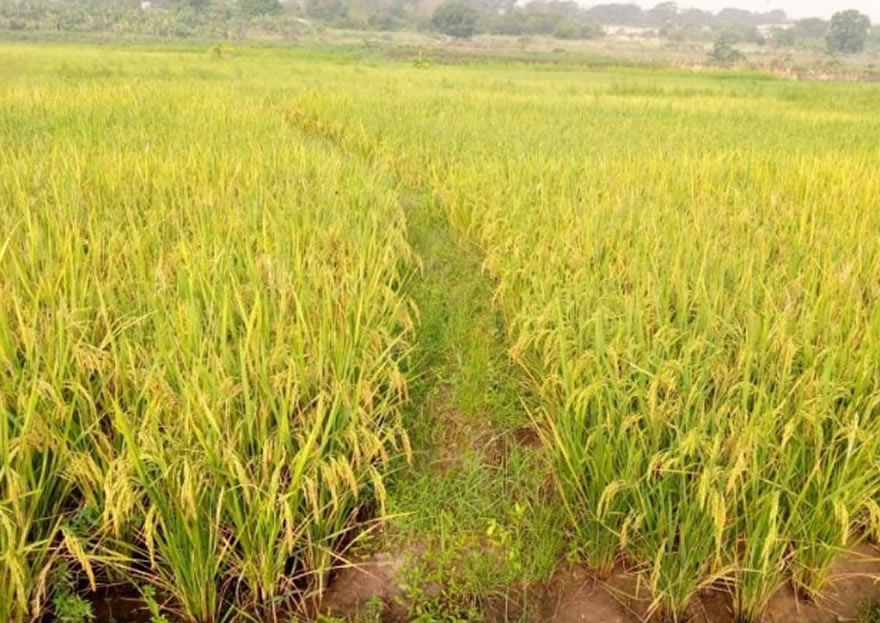
- Rice production in the Nanan rice perimeter, Yamoussoukro-Côte d’Ivoire.
The project aims to provide efficient, affordable, and clean energy to rural Malawi by utilizing rice husk gasification technology as an alternative to traditional electricity sources. Rural electrification in Malawi faces challenges such as high infrastructure costs, dispersed populations, low energy consumption, and poor load factors. This initiative focuses on designing, developing, and implementing a 100-kW rice husk gasification system to generate and distribute electricity sustainably and cost-effectively to rural communities.
The project’s objectives include identifying a suitable gasifier model, designing and constructing the system, simulating its performance, and assessing its economic viability compared to other energy sources. It will also demonstrate the technology in a selected community in Phalombe or Nkhotakota and train local artisans in system operation and maintenance for sustainability. A community management group will be formed to oversee the gasification plant, supported by public-private partnerships to ensure long-term impact.
The project targets multiple outcomes, including increased energy access for lighting, cooking, and income-generating activities, improved living standards, and reduced poverty in rural areas. Additionally, it aims to stimulate micro and small enterprise growth, enhance basic health and education services, reduce reliance on foreign exchange for rural electrification, and mitigate climate change by utilizing renewable biomass energy.
Over its 12-month duration, the project will deliver key outputs, such as baseline studies on rice husk availability, performance data of the gasifier system, economic analysis, and a fully operational rice husk-powered energy system. It also includes capacity-building activities for beneficiaries and support for three master’s research projects. With a total budget of USD 30,000, the project will contribute to Malawi’s rural electrification goals while demonstrating the feasibility of biomass-based gasification as a clean energy solution for rural development.
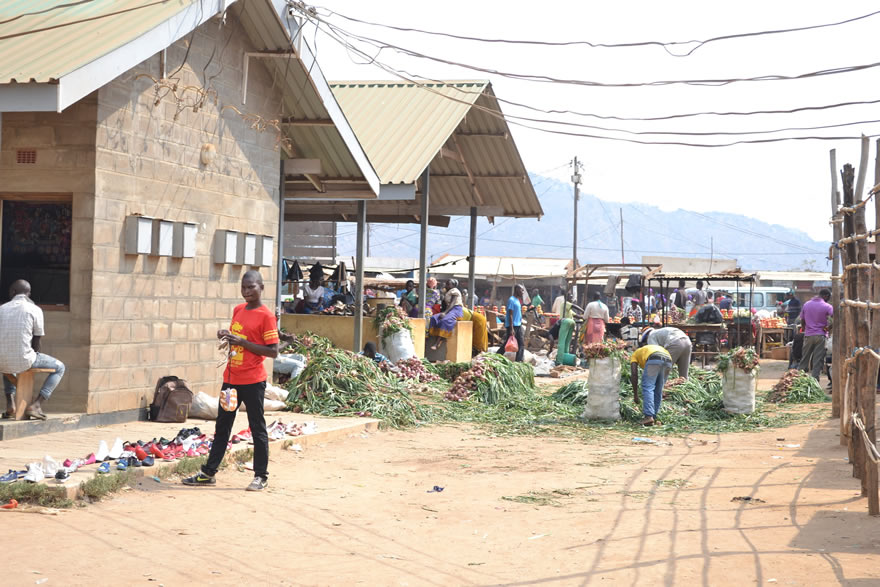
- Tsangano Vegetable market – where the project acquires all the waste.
Tsangano Market in Ntcheu District, Malawi, a key hub for vegetable farmers from Malawi and Mozambique, generates significant vegetable waste due to inadequate waste management infrastructure. This unmanaged waste negatively impacts the environment, climate, and public health. However, vegetable waste can be transformed into biogas, a cleaner alternative to charcoal and fuelwood, to meet the high energy demands of market users such as chips makers and restaurants. Biogas production will also reduce deforestation in the Tsangano area.
A by-product of biogas production, organic fertilizer, will be packaged and sold to smallholder farmers. Organic fertilizer offers an affordable, environmentally friendly alternative to inorganic fertilizers, which are increasingly costly and harmful to water resources. This initiative addresses waste management challenges while creating valuable raw materials for trade.
The project, led by the Malawi University of Science and Technology (MUST) in partnership with Green Impact Technologies (GIT), aims to promote biogas as a sustainable energy source. Using a “Fee-for-Service Social Enterprise Business Model,” the project seeks to ensure long-term financial sustainability and avoid project failures common to donor-funded energy initiatives. Outcomes include increased biogas adoption, improved market sanitation, enhanced organic fertilizer use, and stronger public-private partnerships. The initiative also aims to influence government policies supporting biogas and environmental sustainability in Malawi.
This project aims to utilize maize bran and germ, byproducts of maize milling, to develop high-fiber baked and confectionery products such as muffins, bread, and cookies. Maize bran and germ are rich in fiber, essential oils, vitamins, and proteins, offering significant nutritional and health benefits. The project targets health-conscious consumers and seeks to address the current dominance of low-fiber, highly refined flours in Uganda’s bakery and confectionery market.
The initiative leverages the abundant availability of maize bran and germ, which are typically used as animal feed, to create value-added human food products. Collaborating with private partners like Maganjo Grain Millers, Agro Ways (U) Limited, and JOVAY School of Cookery, the project integrates these byproducts into bakery and confectionery enterprises, providing affordable, nutritious options for consumers.
The primary beneficiaries include maize millers, who will add value to their byproducts, bakery enterprises producing healthier foods, and consumers gaining access to high-fiber products. Maize, Uganda’s most important cereal crop supports 86% of agricultural households, producing substantial amounts of bran and germ as byproducts. By repurposing these into human food, the project addresses consumer demand for healthier options, promotes sustainable use of resources, and enhances the nutritional value of baked goods.
For more details on this project, contact Prof. Charles Muyanja on email: ckmuyanja@caes.mak.ac.ug
This project seeks to develop a single cocoa fermentation box designed for small-scale farmers who lack the resources to generate large quantities of cocoa beans required for storey box fermentation. The single box is cost-effective and gender-inclusive. Additionally, the project will use a yeast starter with pectin-hydrolyzing properties to extract cocoa juice from the pulp through a stainless-steel tank with a hydraulic press. By producing value-added products like ethanol and wine from cocoa pulp juice, the project aims to reduce Uganda’s ethanol import costs, which amounted to USD 500,000 in 2015.
The initiative is expected to boost the income of participating cocoa farmers by up to 25% through the sale of high-quality fermented cocoa beans and value-added products to laboratories and buyers. Collaborating with private sector players such as ICAM Chocolate and Lwanga Enterprises, the project addresses challenges faced by small-scale farmers who often sell fresh, unfermented beans due to the high cost and large-scale requirements of existing fermentation methods.
Cocoa, Uganda’s 4th largest foreign revenue earner supports over 10,000 households. Current spontaneous fermentation methods lead to inconsistent quality and prices. By utilizing pure yeast strains isolated by NaCORI, this project aims to enable controlled fermentation for better-quality beans and improved market opportunities.
For details, contact Mr. Lawrence Muganga on Email: lawrmuganga@yahoo.com
This project, led by Makerere University’s SVAR-RTC in collaboration with TUNADO and Aryodi Bee Farm, aims to develop four bee-based products: propolis powder supplements, bee venom powder supplements, a syrup drink, and a ready-to-drink beverage. TUNADO, representing 9,000 beekeepers, and Aryodi Bee Farm, a business producing up to 15,000 kg of honey per season, provide the practical foundation for this initiative.
The project seeks to address Uganda’s rising rates of immune-compromised individuals caused by malnutrition, communicable diseases, and stress. While bee products like propolis and venom are widely recognized for their medicinal value and commercialized in regions like Asia, Europe, and the USA, their use in Uganda remains minimal. Currently, only 1% of Uganda’s propolis is harvested and utilized by small-scale cottage industries. Production methods are inconsistent, and product quality is poorly understood, highlighting the need for standardized processes and optimized prototypes.
Through this initiative, SVAR-RTC aims to produce scientific publications, mentor students, and secure intellectual property rights. Additionally, it will build the capacity of TUNADO’s members and improve Aryodi Bee Farm’s processing protocols. Long-term, this project will expand market opportunities for underutilized bee products while enhancing local production and quality standards.
For details, contact Dr. Deborah Ruth Amulen on email: amulendeborah@gmail.com
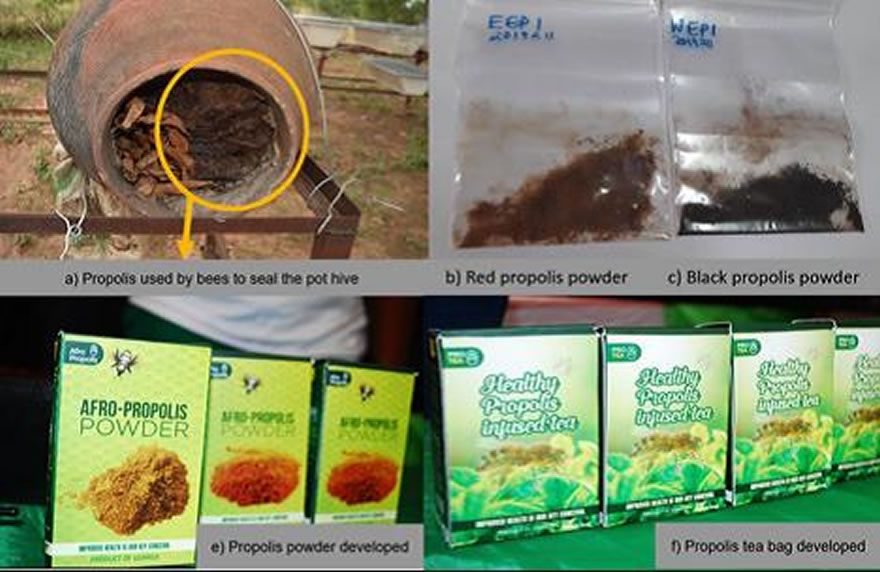
- Sample products from the Bee Propolis project, Uganda
The project aimed to enhance income opportunities for vulnerable communities in the coastal region of Cabo Delgado, Mozambique, one of the country’s poorest areas, particularly in rural zones. The region, rich in biodiversity and located within the Swahili-Maputland hotspot, is home to unique estuarine ecosystems, mangroves, and marine grasses. The project focused on supporting the tourism development strategy outlined in Mozambique’s 2016-2025 National Tourism Strategic Plans, emphasizing public-private partnerships and stakeholder involvement at the district level.
The targeted communities, mainly Kimwane people, rely on subsistence artisanal fisheries. By leveraging the area’s environmental assets, the project aimed to improve livelihoods and contribute to the achievement of the Millennium Development Goals (MDGs), particularly in terms of sustainable development and poverty reduction. The region’s climate features distinct wet and dry seasons, influencing local livelihoods and economic activities.
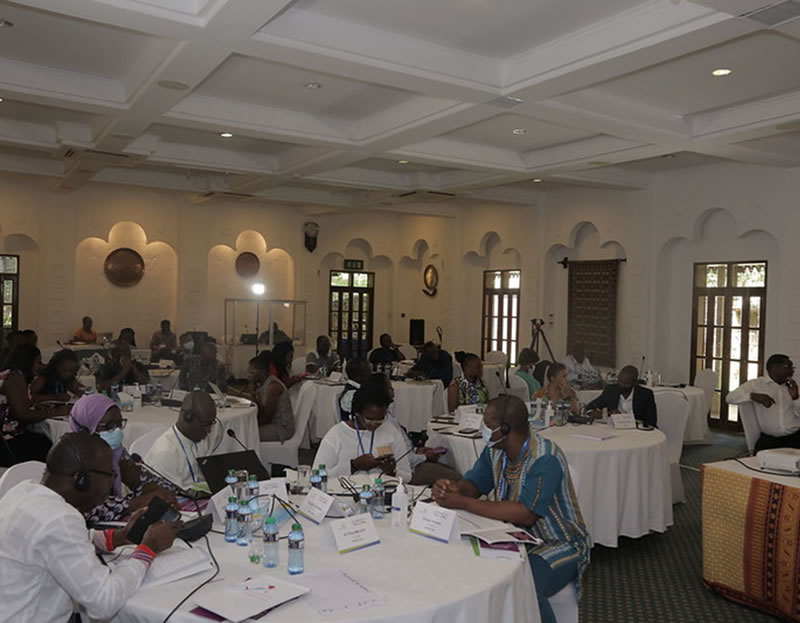
A specialized training workshop titled “The Art of Influencing Policy” held on 25th -27th April, 2022 Mombasa, Kenya. Bringing together representatives from various science granting councils (SGCs) across Africa. The workshop aimed to equip participants with the skills and knowledge required to effectively translate scientific research outcomes into actionable policy advice for governments and stakeholders. This capacity-building event marked a significant step toward strengthening the role of SGCs in guiding evidence-based policymaking across the continent.
The core objective of the training was to prepare SGC representatives to enhance their role as key providers of policy advice. Participants often fund research and issue grants, yet many councils face challenges in leveraging research outcomes to influence policy. Recognizing this gap, the workshop provided an environment for participants to learn essential strategies to bridge the divide between research and policy.
A variety of interactive methodologies were employed to facilitate learning and engagement. Presentations, plenary discussions, and group activities were combined with guest lectures and role plays, allowing participants to gain hands-on experience in policy advocacy. This dynamic approach encouraged the exchange of personal and professional experiences, fostering a collaborative atmosphere. Facilitators such as Daniel Otunge from Science Africa, Geoffrey Banda from the University of Edinburgh, and others provided valuable guidance.
In the introductory session, led by Maurice Bolo of The Scinnovent Centre, participants explored the persistent gap between research and policy. The discussion centered on why this gap exists and what steps researchers can take to ensure their findings are more accessible and relevant to policymakers.
The session also examined strategies to elevate research issues onto the policy agenda. Issues tend to gain traction when a recognized problem converges with a viable solution and a political climate that supports change. Participants learned that effective policy influence requires understanding policymakers’ criteria for evidence, including its relevance, quality, clarity, and sensitivity.
By the end of the training, participants were better prepared to craft impactful policy briefs and advocate for research-based recommendations effectively. Additionally, participants are expected to pitch policy recommendations to influence policy change, extending the impact of their research.
The workshop also laid the groundwork for future capacity-building initiatives. Selected countries will continue the momentum by offering in-country training to further develop policy advisory expertise within their national SGCs. These initiatives aim to foster a community of practice that supports continuous learning and collaboration among science councils across Africa.
The “Art of Influencing Policy” workshop served as a crucial step for SGC representatives in Africa to enhance their policy advisory capacity. By fostering skills in policy brief development, peer learning, and effective advocacy, the training aimed to bridge the gap between scientific research and actionable policy. As participants return to their respective countries, they are equipped to apply these skills to influence meaningful policy change, ensuring that science serves as a foundation for sustainable development across the continent.